Conclusion
Operating Instructions
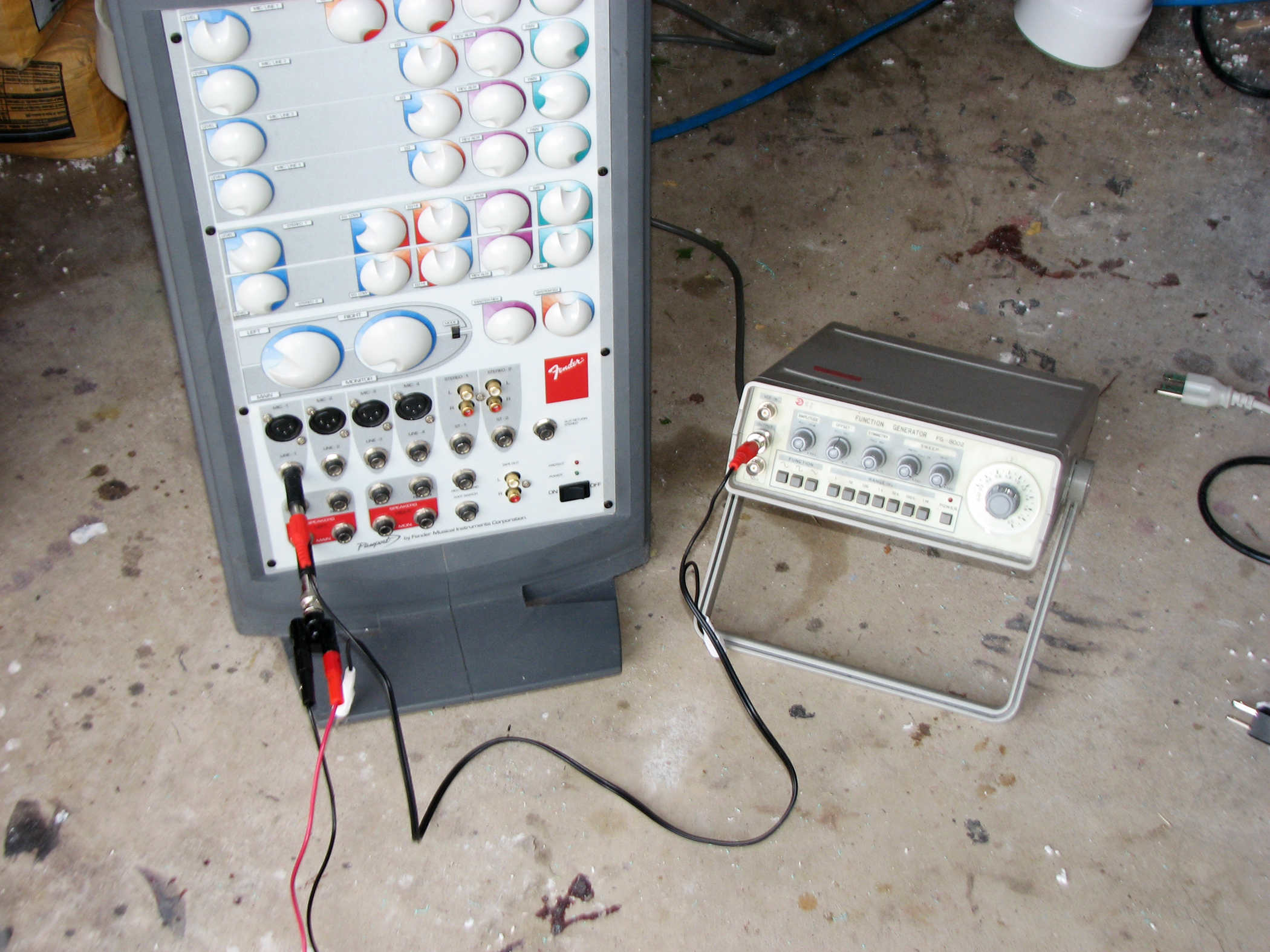
1. Sprinkle some powder across the plate.
2. Starting at a signal of a few hundred hertz, slowly turn the amplifier power up until the powder starts to vibrate. Adjust the frequency and volume until patterns appear!
To reduce friction, I periodically rub graphite powder over the plate and brush off any excess. Then my other powder slides around on this slick surface like a cat in roller skates.
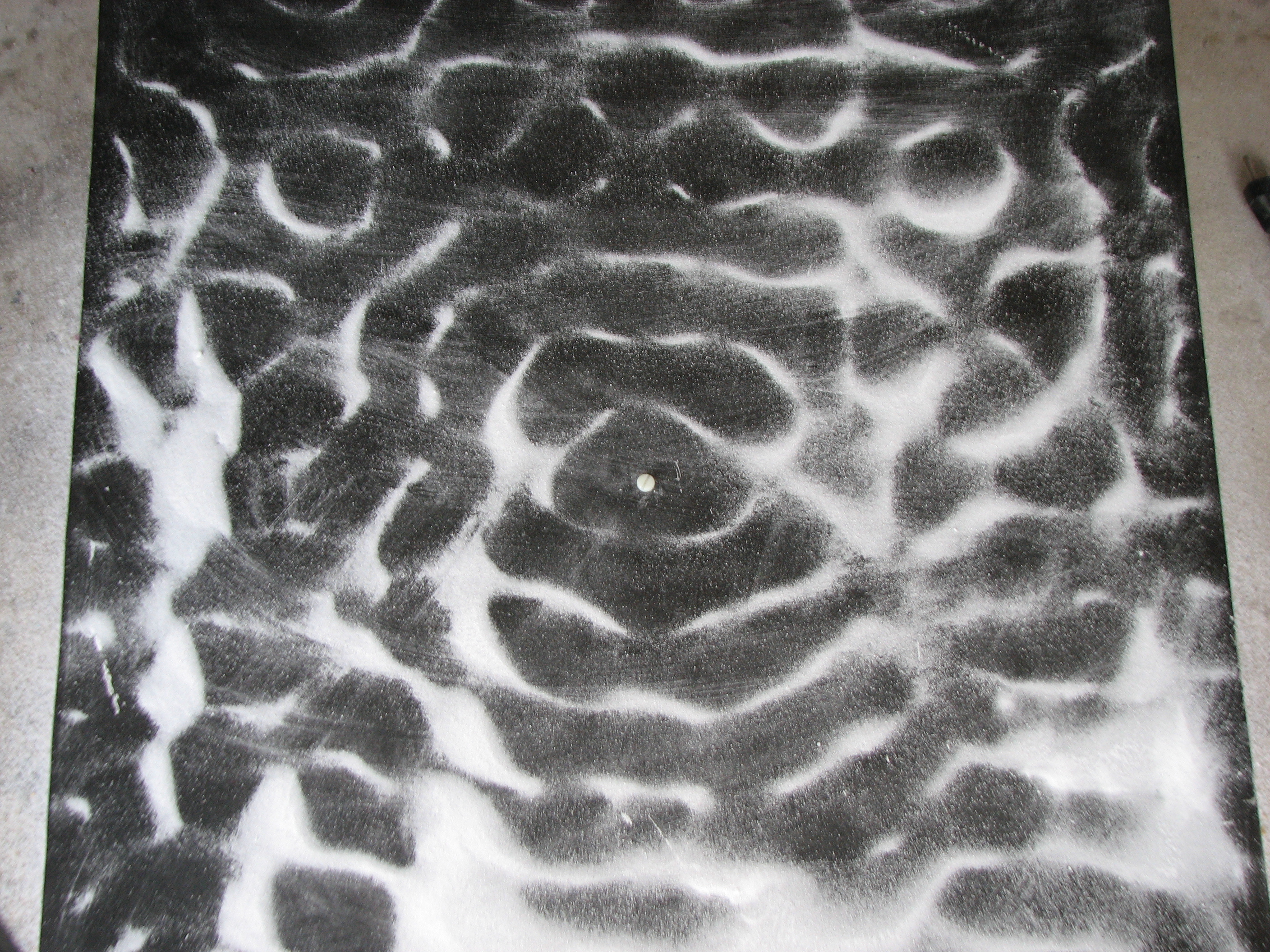
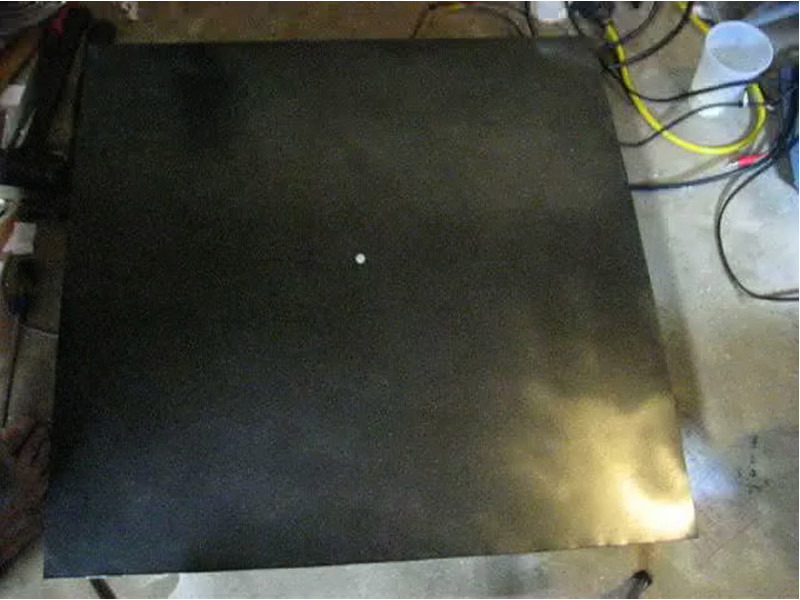
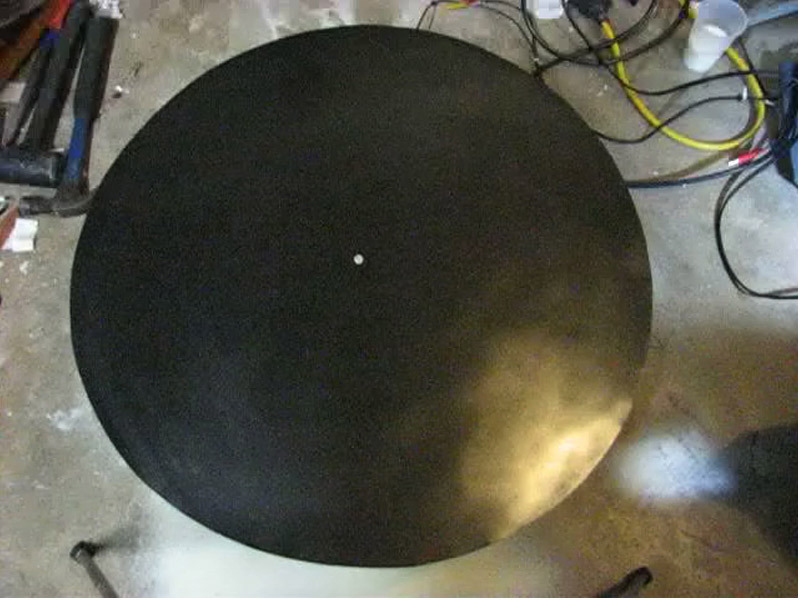
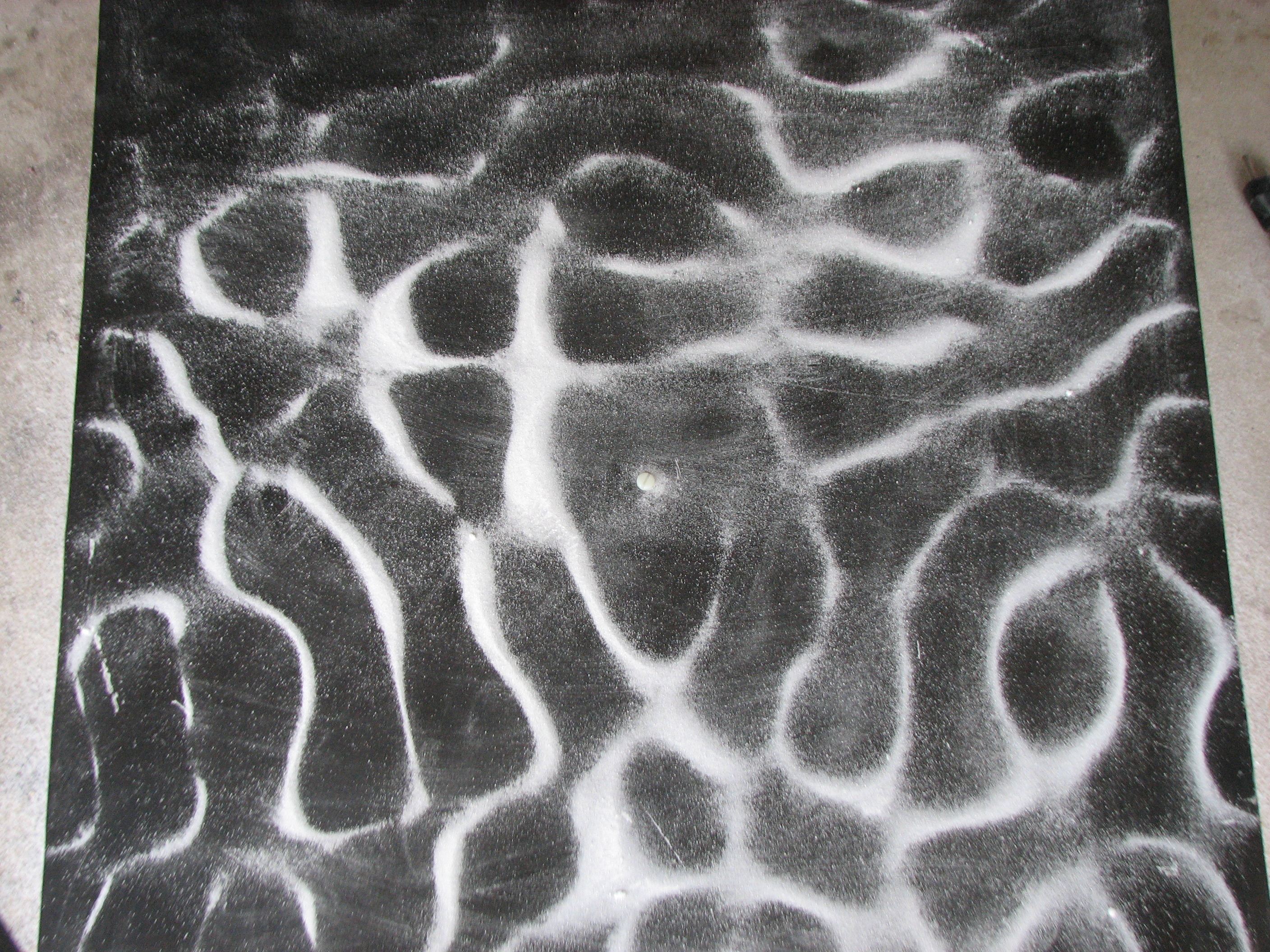
Clean patterns will appear for only those frequencies that resonate with the plate. On smaller plates only very high frequencies will show a stable pattern of nodes and antinodes; on larger plates, lower frequencies will resonate as well. On a large plate with a high frequency, you’ll see a detailed pattern across the plate.
On a round plate, you’ll mostly get concentric circles, with the number of circles indicating the ratio of the driver frequency to the plate’s natural fundamental frequency. In such cases, the driver is playing a harmonic (or multiple) of the lowest frequency that the plate produces naturally when you strike it. With some frequencies, you’ll see a serpentine pattern on the round plate.
On a square plate, or a plate in the shape of a violin or other complex shape, the resonances are more complex and interesting.
If you want a permanent display of your vibrational patterns, photography is the way to go. Although if you have an extremely effective filter mask and a high tolerance for a horrible mess, I would think that laser printer toner would make a nice pattern, and then, using a heat gun from below, you could fuse it to the metal for a permanent display. I haven’t tried this, however. Also note that laser toner is extremely bad for your lungs, laundry, and household harmony.
Keep Your Powder Dry
Any fine powder will work, but the finer the powder, the more sensitive it will be to vibrations, enabling it to work at lower volumes. If you’re using a coarse powder, you may need to turn up the volume quite a bit before it bounces into place.
If the powder is sticky or overly fine, it may not want to bounce at all, but instead may stick to the plate and ignore even the most abusive volume levels.
Some powders, such as salt or sugar, will absorb moisture from the air and melt (especially here in Texas), making a terrible mess. Gelatin and graphite powder are both very fine, but tend to stick to the plate over time. Fine white sand should work nicely, with minimal mess.
The traditional superfine substance of choice is Lycopodium powder, which is the spore of a particular fern. This powder is used by magicians and pyrotechnicians as a flash powder, and it can be found at chemical supply houses.
This project first appeared in MAKE Volume 16, page 122.