









The Sangaku Case Mod
 300 hours and approximately 130 wood joints to build, Nicholas Falzone’s excellent case mod “The Sangaku case mod a fusion of computer technology with Japanese the furniture-making tradition. Sangaku translates to “mathematics tablet” in Japanese. The top connects the sides, with the shorter pieces lining up with the lines from the doors and the acrylic strip carrying the black from the front of the case up and over through the back. The two sides started out being four sliding shoji doors, two per side, but to get the lighting to work, I combined the two on one side. The joinery on the doors was made almost entirely by hand, using Japanese chisels and a dozuki saw.” [via] Link.

 In MAKE 01 we have a great


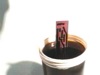 Handy how to on making printed circuit boards, Incepinar writes – “I spent a lot of time to find an easy to use PCB drawing program and failed. (Believe there should be lots of but it’s just me can’t find it!) All of them I came across were either so professional or hard to handle. So, in admiration of the AMIGA’s Deluxe Paint, I decided to use Windows’s Paint program to create my own PCBs. All I needed was it’s copy and paste functionality. Thus any other drawing editor on any Operating System may be utilized for the following work style that I currently (and will continue to) use.”


 We’re fans of PVC here at MAKE, from
 Rob solved a phone ringing problem in cubicle land “I work in an office of several cubicles. Often someone is on the other side of the room, and a phone rings. Who’s phone is it? All the phones sound the same, and the cubicle walls block line-of-sight to the indicator light on the phone. That is, unless it’s remotely located in a picture of a deer, up where I can see it. Now, with Caller Eye Deer, I know whether or not to run across the room.”