









Are U.S. innovators losing their competitive edge?
 Interesting stories and challenges for Makers and inventors in the USA – “When James E. West was 8 years old, he propped himself on his bed’s brass footboard one afternoon and stretched to plug the cord of a radio he had repaired into a ceiling outlet. It was one of his first experiments. West’s hand sealed to the light socket as 120 volts of electricity shimmied through his body, freezing him in place until his brother knocked him from the footboard and onto the floor. Like more storied inventors who preceded him, he was quickly hooked on the juice–even as he lay shivering from that first encounter…” Link.

 Dave writes “This site has some amazing products of fancy knots. I was looking for some more detailed info for finishing off a turks head and found this site.” Here’s a great step by step on making star knots. There’s something really satisfying about tying a sturdy yet ascetically pleasing knot.
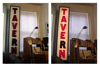 Brad writes “I’ve always wanted to be a proud owner of some unnecessarily large light-up outdoor sign. Specifically I wanted some old sign that used to adorn the entrance of some dive bar somewhere. The problem is these signs are “collectors items” of sorts and if they’re in any working order then they’re gonna cost you quite a bit of money. On the other hand, if they don’t work, you’re still going to end up spending your life savings trying to fix what time and weather has done to these signs over the years. You’ll also need the know-how to do the work and a team of people to help move the sign since they generally weigh more than small cars. My solution was simple. I just needed to build what I wanted.”
 Surj Patel is working on a homebrew GSM mobile phone project – so far it looks like they’ve found a few candidates for the hardware to start tinkering with. Awhile back I was playing with the
  The
The  How to on making “Toynbee Tile Mosaics”, unique asphalt tile installations found all over North and South America. “This is a method for making colorful, permanent mosaic installations in asphalt roads and lots. Like glass, asphalt appears to be a solid but is actually a liquid. This means that a design affixed to it with more asphalt will eventually settle in and become a part of it. We owe our awareness of this technique to a nameless mystic we have never encountered in person.”
 ![MAKE OUT :-]](https://i0.wp.com/makezine.com/wp-content/uploads/2005/11/750thumb2.jpg?fit=79%2C82&ssl=1)
 One of our favorite web comics The Joy of Tech did an excellent job of breaking the story about our new entry in the Magazine arena – MAKE OUT: Geek love on your terms. In the premiere issue you can win a McGyver Fantasy date and build a love detector. Thanks to everyone who sent this in!