









Hacking a mouse for encoders
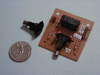 Incremental optical encoders can be quite expensive...commercially available units from US Digital can go from $7 USD (mylar encoder disk) and $50 USD (encased encoder). Taking apart the ubiquitous $5 PC mouse, however, can give you two cheap but quite reliable encoders plus two infrared (IR) emitter-detector pairs. This tutorial will show you how to take apart a mouse, remove these parts and protoboard your own quadrature encoder in an afternoon or two. Link.

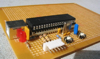 In the Media Arts and Technology program, we explore new metaphors for artistic interactivity that connect the physical world with the virtual realm. We develop new techniques for computing that generate music and visual arts in a myriad of ways; but in order to put forth these techniques, we must create new sensors, and build interfaces that can better grasp their control and generation. The CUI allows us to bind physical processes or actions to corresponding digital expressions.

 wikiHow is a collaborative writing project to build the world’s largest how-to manual. With your contributions, we can create a free resource that helps people by offering clear, concise solutions to the problems of everyday life. There are a ton of articles, here’s a good one on
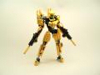 Here are some great concept models and Mecha robots made from LEGOs. Complete with detailed descriptions too- Armament: Beam rifle x2 (~2 megawatt charge, stored in shoulder charging racks/weapons binders), clay bazooka (fed from 5-round clips, hand-carried). Even lighter armored than the L-Siren, V-Sirens are built for speed and agility above all else. Typically not armed with melee weapons, a V-Siren is most frequently seen slinging either its integral beam guns or a “clay bazooka”, a shotgun-like multi-payload launcher. [

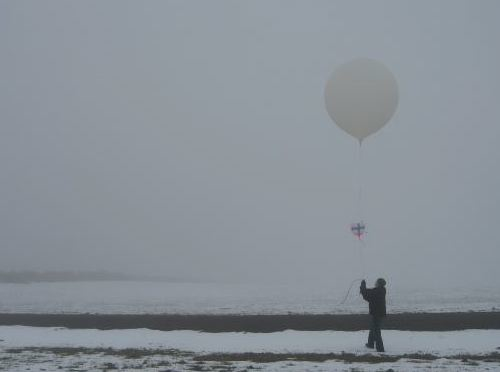 The project is aimed in part at demonstrating that NASA’s new balloon vehicle can carry sophisticated instruments in near-space fairly cheaply. Balloon-borne telescopes can be launched at roughly 1 per cent of the cost of deploying a satellite by conventional rocket launches. The balloon has a volume of about 1.2-million cubic metres and is as high as a 33-storey building. [