









HOW TO make a homemade PBX
 Great write up, background and tinkering- a homemade PBX system! Eight telephone extensions with roughly telco spec voltages and currents (48V onhook, 90VRMS 20Hz sinusoidal ringing, about 25mA loop current offhook.) Ring trip is sub-spec but can handle at least 3 “500” type rotary dial telephone sets in parallel without false tripping. Lines are not balanced, nor is one side ground. [via] Link.

 I was getting tired of the aftermarket car scents that dangle from your rear view mirror. Besides, short of going to an automotive store, I was never able to find a coffee scented car freshner so I decided to make my own. Total cost= around 3 dollars. Here are the supplies you will need. Coffee beans, a small jar to hold the beans (preferably with an aluminum lid), a fork (I used a hammer and a small pick for making the holes in the lid). [


 The main unit has four buttons. In order these are on/off, remote call disable, push to talk, and remote station select. The remote unit has two buttons. In order these are the call button and the privacy button (which disables the audio and the indicator lamp). Only one of these fancy remotes is supported; the other is just a plain loudspeaker with no call button or indicator lamp feature.
  I’m not on Sprint- let me know if this is useful. Most cell phones have a built in modem to allow for data transfer, all you need is a data cable and the cell modem drivers. Sprint has a decent data network that will give you access to approximately 240kbs of bandwidth, much faster that your standard dialup. [
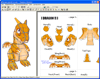 ...a handy little product from Japan, “Pepakura”. This tool creates a printable, origami-like pattern from which 3D models may be translated into paper “reality”. Nearly anything that you can model can be printed and brought into this world, in all of it’s 3D glory. [