









Camera fished from pond takes surrealistic photos
 If only you could replicate this. Farrell Eaves calls it his magic camera. It takes the darnedest pictures. Sometimes it creates pastel auras or adds symmetrical streaks the color of rainbows. Sometimes drips or blobs of color will magically appear that change a well-composed snapshot into art. It’s like a digital kaleidoscope. Link.




 Good place to get inspired. Of all the ideas in Why Not?, the biggest is our desire to incite a why-not movement. It starts at www.whynot.net, an online forum for people to share and talk about their ideas, be they big or small, practical or blue-sky. Which ones do you like and why? How could they be improved? The site is literally an idea free-for-all, where participants can help develop each other’s brainstorms, notions, and shower-time inspirations.
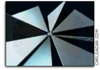 On June 21, 2005, Cosmos 1, a project of The Planetary Society and Cosmos Studios, is launching a breakthrough mission to assist the world community in developing future solar sail technologies. Four days after launch, the spacecraft will deploy its eight silver sails and become one of the brightest objects crossing the night sky. [


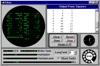 The EDSAC was the world’s first stored-program computer to operate a regular computing service. Designed and built at Cambridge University, England, the EDSAC performed its first calculation on 6th May 1949. The Edsac simulator is a faithful software evocation of the EDSAC computer as it existed in 1949-51. The user interface has all the controls and displays of the original machine, and the system includes a library of original programs, subroutines, and debugging software. The simulator is intended for use in teaching the history of computing; as a tutorial introduction to the classic “von Neumann” computer; or as an historical experience for current computer practitioners. [