









Ten most needed circuits for the DIYer…
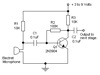 Pretty good list of some starter circuits for many projects…“a list of the top ten most needed circuits that are a must know for anyone interested in DIY projects. These are the basics that can all be interchanged and used in conjunction with each other to make many of the projects that we all love so much.” Link.

 Great how to on detecting a laser pointer “break” using a serial port – Chard writes “Ever wanted to make your own laser beam security system. You know the kind they have in the movies, with dozens of lasers and the thief has to limbo through them. Well, I just made a simple laser beam break detector. My computer can now tell when the beam is broken. The parts I used are: 5.6k resistor, photo diode, Digikey part #PDB-V107-ND, serial port from my PC…”
 “Edible Estates is the brainchild of Fritz Haeg, who has made it his mission to replace the water-guzzling, pesticide-drenched grasslands of American front yards with functional, fruitful plots filled with all things edible. The first lawn revival took place in Salina, Kansas, where a family offered up their conventional front yard for transformation and vowed to maintain the garden as a living, thriving edible installation.” [
 Here’s a great new Instructable in the Make group on building a five foot tall Jacob’s ladder from Ewilhelm, he writes “This classic climbing arc completes any mad scientist’s dungeon. Don’t touch the electrodes: they’re at 12 kV! Get a neon sign transformer rated for 9 – 12 kV and 30 mA. Make sure it’s an old style, heavy coil transformer and not solid-state. The solid-state transformers won’t start the arc. I got a Transco 12 kV 30 mA transformer on Ebay for $35. It didn’t have a wall plug, so I wired one on.”…
 I asked Scott and Bjoern to write up what they’re up to when I saw the challenge of making a functional music player in 30 minutes, they write “d.tools is a hardware and software system that enables designers to rapidly prototype the bits (the form) and the atoms (the interaction model) of physical user interfaces in concert. d.tools was built to support design thinking rather than implementation tinkering. With d.tools, designers place physical controllers (e.g., buttons, sliders), sensors (e.g., accelerometers), and output devices (e.g., LEDs, LCD screens) directly onto form prototypes, and author their behavior visually in our software workbench.” More info and downloads
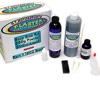 A Make reader is wondering about using “Plastex” – “Have you heard of ‘Plastex’? I’m interested in the home casting materials of plastex and friendly plastic – the former, in particular, anecdotally seems like it make have enough structural integrity to actually make useful items from and not just use it for gap-filling repair work as it is sold, yet seems much easier to work with than the entry-bar for other types of molding. I have not experimented with these items on my ‘to do’ list. (actually I did use friendly plastic as a kid – it melts however at high temperatures which could be a liability).” Have any Makers out there used this stuff? I’ve only see it
 Arno writes “Just like the