










HOW TO – Make an Automatic Pet Waterer
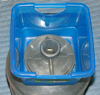 Rip writes “This site describes how to make an automatic pet watering bowl for under $15.00 using commonly available materials. The bowl is easier to use and clean than the commerical units available.” Link.

Rip writes “This site describes how to make an automatic pet watering bowl for under $15.00 using commonly available materials. The bowl is easier to use and clean than the commerical units available.” Link.

 Trevor writes “Here’s a site related to the recent Make: 04 article on how to take high speed photographs. It is maintained by my High Speed Imaging teacher and has a bunch of circuits you can build for high speed photography, such as sound triggers and delays.” Link. Make article here, and our kit is now available as well.

 Using an Xbox (1st generation) headset and a PSP headphone remote you can make your own headset for SOCOM PSP. You can likely use just about any type of headset, like the ones that come with cell phones too. Link.

 Star writes “Upcycle Art is a place you will find fun projects that you can make from those things you’ve been tossing into garvages bins or recycle bins. Follow the step by step instractions and enjoy making cool items by yourself.” Link.

 Here’s part 2 of Fabienne Serriere’s great rotary phone to cell phone project “This week we bring you Part 2 of The Magic Phone How-To: The Circuit. The Magic Phone is a project where both a DECT compatible wireless home phone and a GSM cellphone are placed inside an old rotary phone. In Part 1 of the How-To, we showed you how to reverse engineer the matrix on a phone circuit.” Link.

 Here’s a pretty simply how to on using a text message (SMS) from your phone to put your Mac to sleep at home. While that in itself isn’t that useful, you could easily make your own scripts and email rules to do other things like send back ring tones, trigger a robot, turn on a web camera…[via] Link.


The Bazaar Bizarre craft fair is coming soon to three major cities! November 26-27 in Cleveland, OH and December 11th in both Los Angeles and Boston. Event founder Greg der Ananian says, “Dissatisfied with stencils of country ducks and painted wooden slices of watermelon, I decided to use what I’d learned as a child to express my own interests. To my surprise and delight, a lot of my friends were experiencing the same kind of personal renaissance. How exactly to share these objets de craft was a project upon which we embarked. The result? Bazaar Bizarre.” Link.