










Review of the Gameboy Micro
 I can’t wait to get one and start hacking, a super tiny ebook reader is my first project – You already know that the Game Boy Micro is small when you hear people tell you that it’s just barely bigger than the cartridge that fits into it, but you don’t really get a sense for just how small it is until you get your hands on it. Your thumb just about dwarfs it. The AC adapter for the system is nearly as big as the system it charges — the charger is slightly thicker, almost exactly as tall, and a little more than half as wide. The whole system is smaller than just the screen on Sony’s PSP. It almost fits inside a Nintendo DS game case. We’re talking very, very small. Link.

 $77, not bad – Who this is for: You: owner of a small design company, a seat-of-your-pants freelancer, or perhaps an under-appreciated intern in the marketing staff of a big corporation. You wish to improve what you can offer photographically for your projects, you might only own a mid-range consumer digital camera. Read on, this article is intended as a helpful starting point.
 Here’s a good tip from the comments on our Maker challenge: Wiring a House – I’m an architect, AND I recently renovated my own house from bare studs on up. I’m with the guy who said to run conduit. It’s called ENT (Electrical Nonmetallic Tubing), some contractors call it Smurf Tube, cause it’s usually blue. You run it from junction juntion box to box inside the walls and cover the standard boxes with a standard wall plate. You can then run any type of wire in them in the future and you can run the wire anywhere in the system by skipping from box to box. Even if you run structured cable, run it in smurf.
 This article will show you how to make your own microphone pop-filter. A pop-filter is a small screen that goes between a microphone and your mouth to prevent sharp popping sounds (known as plosives) like “P” and “B” words from overloading the mic level and distorting. Commercially available pop-filters are expensive and can often cost 20 dollars or more. The pop-filter you can build here will cost less than $6 dollars.
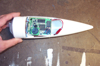 Here’s a directory of images and videos from a fellow who hacked a CVS cam and put it -in- a rocket. The launch video is amazing, from pad to sky to a lovely decent, until it lands in a tree- but it was later retrived.


 MAKE Creative Director David Albertson shared some of his fav tools with me – and now I’m sharing them with you! Not the latest gadgets, but two of my favorite tools are an