








Cars that drive where you draw
 Lineriders cars have been designed by Philip Worthington and William Denniss to follow lines that people draw on the surface with pens, speeding up and slowing down according to a visual annotation language. The toy car is equipped with sensors that allow it to follow the lines. the track can be annotated with symbols that are understood optically by the car, telling it to alter it’s driving pattern (eg. speeding up for a jump, slowing down or preparing for an oncoming obstacle or sharp turn). Link.

 Could personal video recorder (PVR) software be the “killer app” that launches Linux into millions of living rooms? A growing number of Linux-based PVR products are giving couch potatoes new choices–and new freedom–even as proprietary PVR vendors continue to impose rules limiting where, when, and how viewers use their products.

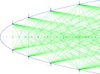 MAKE pal Hugh Macleod has interesting post about “prime tagging” Using multiple tags, about 20 tags would cover the 1.3 million single-use tags at Technorati. Using multiple tags, about 33 tags could give a unique identity to every person in the whole world. (Quite a few years since I studied statistics, believe I’m in the ballpark, but anybody out there who could corroborate?) And 20-30 tags are less cumbersome to navigate than 1.3 million, or 6 billion! Multiple tags can replace any single tag, however unique that is.
 The Industrial Design Excellence Awards are dedicated to fostering business and public understanding of the importance of industrial design excellence to the quality of life and the economy. There are 148 winners of the 2005 Industrial Design Excellence Award (IDEA). Some cool stuff, a lot of stuff I’ll be using for ideas to make…
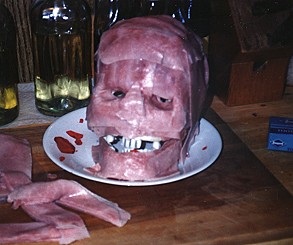 `The matrix has its roots in primitive arcade games,’ said the voice-over, `in early graphics programs and military experimentation with cranial jacks.’ William Gibson, Neuromancer – 1984. At the bottom of the article are some images from a September 15, 1999 issue of the Journal of Neuroscience and was the first demonstration that spatiotemporal natural scenes can be reconstructed from the ensemble responses of visual neurons.
 Location-aware technologies combined with mapping and other data are poised to create a whole new class of web apps and services. Maps are becoming an interface, helping us to visualize and access a variety of data. Location is fertile ground for hackers and researchers who mash up Google Maps with Craigslist or plug restaurant info into dashboard navigation. MAKE will be there June 29th and 30th.