









Maker Faire!
 Join the creators of MAKE magazine, the MythBusters, and thousands of tech DIY enthusiasts, crafters, educators, tinkerers, hobbyists, science clubs, students, and authors at MAKE’s first ever Maker Faire. All kinds of people who make amazing things in garages, basements, and backyards. Inspiration, Know-How, and Spirited Mischief-Making: Weird Science, Ultimate Garage, Robotics, Digital Entertainment/Gaming,Green Tech & Electronics Recycling, Ultimate Workshop MAKE: Remix Video Film Festival and more… I have a lot more to post about all this, but the site is live go check it out!! Link.

 Phil writes – “Over the past few years, I’ve built up a few battery packs for myself and for other people. Most of them worked fine – in fact, one of the first packs I built over five years ago is still in service, working fine in a torch in the bottom of my cupboard. The big problem with soldering to batteries is that you tend to damage the plastic separator, and the cell seals. This – as you might guess – is not a Good Thing. In some cases, solder can splatter over the cell’s pressure relief vent. There’s a reason the datasheets make a big fuss about the vent – in an overpressure situation, the vent is used to release the excess pressure in the cell. Needless to say, blocking the vent with solder is never a good plan, unless you’re trying to get a Darwin Award, or you happen to enjoy watching your battery pack undergoing rapid, uncontrolled self-disassembly.”
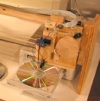 Great Maker project for CD burning automation – “Building some sort of gadget that changes the CDs in my cd tray is something I have often thought about. Mostly in the context of ripping my CD collection or burning a backup of my 5 gig photo collection. My first thought was to come up with something extremely simple, with no electronics. Ideally, the motion of the cd tray would trip some sort of mechanism that would eject the CD from the tray and insert the next one. After months of thinking, I still hadn’t thought of a mechanism that had a hope of actually working.”
 And we’re back! PSPupdates is cranking out the PSP goodness! – “That’s right, the day we’ve all been waiting for has finally arrived! Thanks to the fantastic work by our forum moderator Fanjita and his coding companion Ditlew, it is now possible to play vast amounts of homebrew programs and emulators on every PSP in the world, including those with 2.60 Firmware! Thanks to their monumental achievement, every PSP in the world is capable of playing homebrew!” [
 Here’s a how to on making a head mounted camera from a Neuros MPEG4 Recorder…“The AdventureCAM project started because we needed a way to hike and shoot video footage at the same time. We are constantly reworking this setup, but the basic configuration is pretty much the same (digital storage, remote camera, remote trigger, backpack). Our most recent update to this setup is to replace the tape-based DV Camcorder with a solid state recording mechanism.” [
 Ian’s new Instructable looks great for Nixie tube hackers, but be careful this one requires a lot of care. He writes “This SMPS boosts low voltage (5-20 volts) to the high voltage needed to drive nixie tubes (170-200 volts). Be warned: even though this small circuit can be operated on batteries/low voltage wall-worts, the output is more than enough to kill you!”
 Check out Steve’s amazing paint ball shooting, RC controlled tank made from printer parts. There are dozens of photos on how he made it and best of all Steve talks about the different parts, problems that needed to be solved and documents some clever solutions to power, move and use compressed air for the paint balls.[