










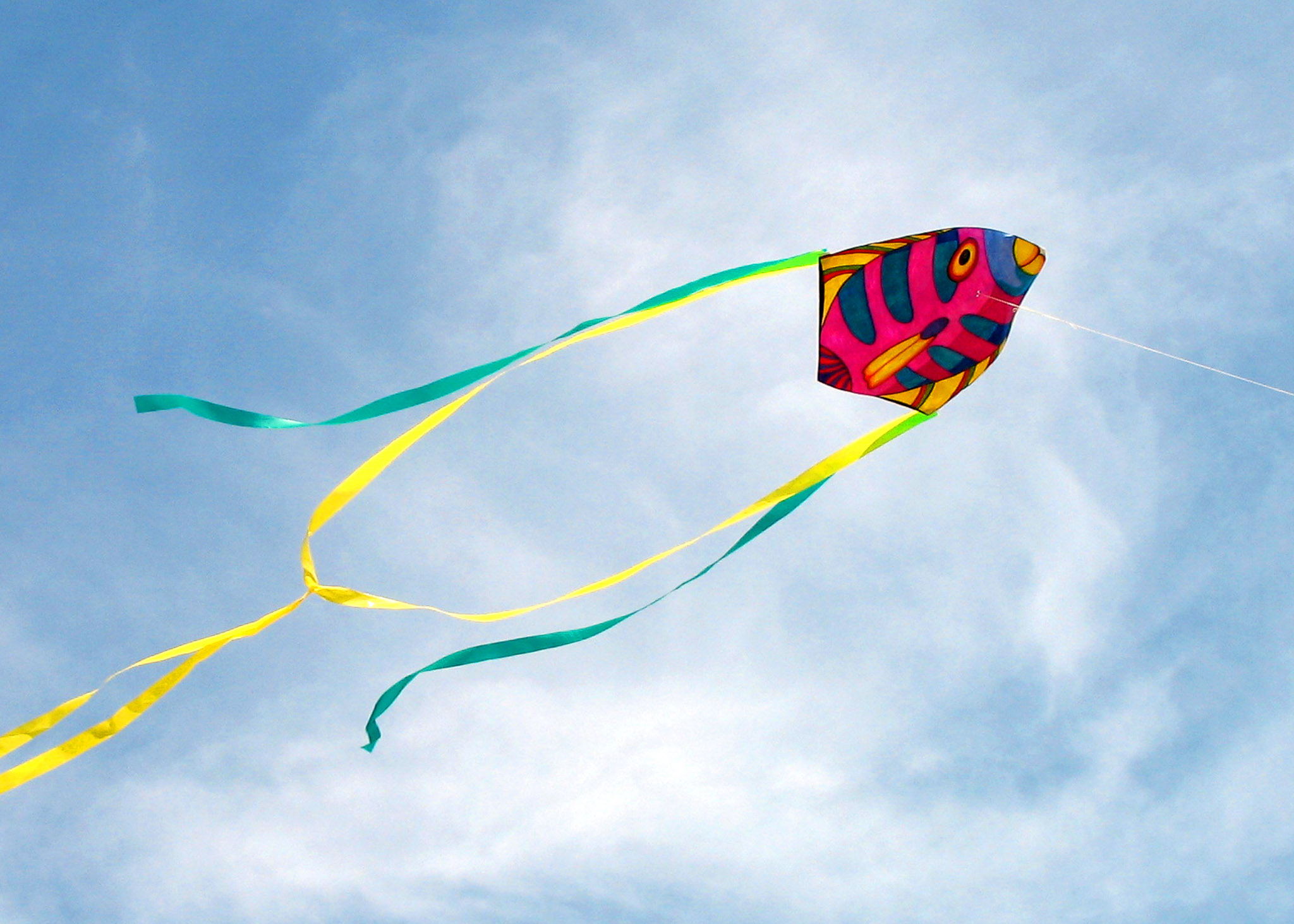


Photography by Lindsey Johnson
In 1979 my wife, Ronda, and I moved to the Central Oregon Coast, where we discovered our love for kites. We began attending workshops to learn the art of kite design and construction. As we became involved with local and international kite clubs, we formed strong friendships with people from around the world. What began as a hobby grew into a business making and selling high-quality kite kits worldwide. We’ve built a global reputation, traveling extensively to share our love of kites and leading kite-making workshops for all ages.
Our Maker Faire experience began in 2019 when Nic O’Neill of Fortuna Found invited us to join her team. Through that collaboration we’ve had the opportunity to share the Ty Glider — a small, hands-on project for kids and adults. Participants cut out the kite using a hand-operated die-cutting machine, for an interactive experience that blends art, science, and a lot of joy. These workshops are always a big hit, and it’s rewarding to see all generations discover the magic of kite-making.
Why Kites Are Awesome
Kites are amazing. Flying a kite isn’t just about watching it soar — it’s about feeling the tug of the wind and being part of the magic.
Kites might seem simple, but they’re full of surprises. They teach us about science, aerodynamics, and even ecology, all while improving coordination and motor skills. Kites also open doors to creativity and learning. Did you know the Wright brothers used kites to help invent airplanes? Or that parachutes and hang gliders were inspired by them?
Flying a kite connects you to nature in a way that’s both grounding and exhilarating. You start noticing how the wind shapes everything around you — from trees to birds — and it feels freeing.
Making your own kite takes it up a notch, teaching useful skills like knot-tying and design while sparking creativity. We’re embracing technology by using 3D printing for custom fittings and connectors that allow for precise, durable, and innovative designs.
And the best part? Kites create unforgettable memories. Make a kite, head outside, and see for yourself!
Tradition + Innovation

Photo by Keith Hammond
This project combines traditional kite-making methods with contemporary innovations like 3D printing, offering a unique and enjoyable build for kite enthusiasts of all ages. This kite, named Wildfish, started as an easy-to-build kite for a hands-on workshop at the Wildwood, New Jersey festival. It was made from Tyvek, with folded corners and small mailing labels to create the pockets for the fiberglass spine and bowed spreader.
Fifteen years later, the Wildfish has evolved into the Maker-Fish, keeping the same sail material, shape, and fiberglass frame. Thanks to 3D printing, we’ve swapped the folded corners for easy-to-print fittings and added a simple no-sew, peel-and-stick assembly method.


- Sail: A kite’s main body, usually made from ripstop nylon or polyester, or in our case Tyvek. It’s lightweight and crucial for flight.
- Frame: This gives the kite its structure — often a vertical spine, cross-spar(s), and/or spreaders made from bamboo, fiberglass, or carbon fiber rods.
- Dihedral: Rigid kites with a frame often incorporate a dihedral, similar to the upward angle of an airplane’s wings. This stabilizes the kite during flight and helps it respond smoothly to wind changes. A dihedral can be achieved by using a cross-fitting with a built-in angle, or by tensioning a line stretched from tip to tip across the cross-spar. Both ways are effective, but the tensioned line allows you to fine-tune the kite’s performance.
- Camber: The Maker-Fish uses camber — an upward curve at the nose — to create lift, replacing the need for a dihedral. This curve is formed by the 3D-printed center fitting, which flexes the spine into shape. Camber not only enhances lift but also makes relaunching easy; a quick tug on the line can get the kite back in the air if it lands face-down. This feature has been used for hundreds of years in the traditional fighter kites of India and Pakistan. In those kites, bamboo was heated over a flame and then bent by hand to create the desired curve. The Maker-Fish carries this time-honored tradition forward with a modern, 3D-printed twist.
- Bridle: Connects the kite to the flying line, influencing how it flies. The Maker-Fish doesn’t have a bridle because the flying line is connected directly to the kite.
- Tail: Not all kites need a tail, but they can provide both stability and visual flair. Typically made from ribbons or strips of fabric, tails add movement and color to the kite’s flight. Since the Maker-Fish is a flat kite, it relies on a tail for stability and — bonus — the tail enhances its fish-like appearance, bringing the design to life in the sky.
- Flying line: The string you use to control the kite, usually nylon or polyester twine.
Designing and Building Kites
- Aerodynamics: It’s all about lift, drag, and stability. The kite’s shape and bridle points are key to its flight.
- Materials: Lightweight and durable materials are a must for performance and longevity.
- Shape and Structure: Different shapes mean different flying characteristics. Delta kites are stable, while stunt kites are acrobatic.
- Aesthetics: Colors, patterns, and decorations make kites visually stunning. We use techniques like painting, applique, and printed fabrics.
A Brief History of Kites
Kites go back more than 2,000 years, starting in ancient China. Back then, people used kites for signaling, measuring distances, and even scaring enemies with bamboo strips attached to the kites that made creepy screeching sounds. The designs of those kites still inspire modern ones today. In Polynesia, they used kites to fish, flying baited lines over the water to catch fish — a method that’s also still around.
In the late 1800s and early 1900s, kites were used in wartime for surveillance and even as weapons to take down enemy aircraft. They also helped scientists study the weather.
Today, kites are all about fun. Kite festivals, kite surfing, and snowboarding with kites make them even more exciting.
Types of Kites
Single-Line Kites
Classic and easy to fly, single-line kites like diamond, delta, or box kites are perfect for beginners. Some can be massive and used as show kites, filling the sky with vibrant colors and shapes.
Stunt Kites
With two or more lines, stunt kites let you perform cool tricks and maneuvers in the air. Teams also use them for precision routines choreographed to music, adding a dynamic element to kite festivals.
Power Kites
These massive kites generate hundreds of pounds of pull, making them ideal for extreme sports like kite surfing, kite-powered buggies, and snowboarding.
Inflatable & Large Show Kites
Inflatable kites hold their shape with air pressure, and large 3D designs really stand out at kite festivals. These kites fill the sky with incredible, larger-than-life displays — a spectacle of color and creativity that makes any kite festival unforgettable.
Build Your OWN Maker-Fish Kite

Our DIY kite is inspired by a classic shield design. By rotating this shape 180 degrees, we achieve a silhouette shaped like a fish, which is further enhanced by adding tails that join together a short distance from the base, giving the appearance of a fish’s body in motion. The kite is constructed from hard-structured Tyvek, a material known for its light weight and durability, similar to the tough envelopes used by FedEx. The frame is built using 1.5mm fiberglass rods, ensuring a strong yet flexible structure.
The 3D-printed plastic parts connect the sail to the frame and are designed for precision and ease of assembly, adhering securely with strong double-sided tape.
The Maker-Fish design is highly adaptable, making it an excellent platform for creating other kite shapes. Visit the Fortuna Found resources page for detailed guides and easy-to-follow videos. I’ll also share tips from my many years of making, including handling sticky parts and safely using a craft knife. These lessons apply to all kinds of kite designs, whether you’re sewing or not!