









Open Design for ~$800 Swarm Robots
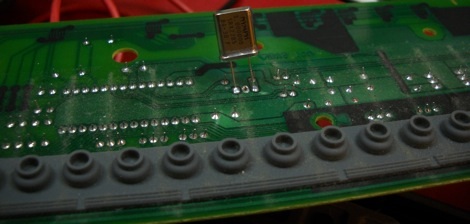
“There are lots of multi-robot designs out there. Most are either research platforms well over $2K (often $10K or more), or are hobbyist bots under $400 with tiny brains and few sensors. But George Mason University’s new FlockBots wiki is interesting. They’re trying to pack as much functionality as possible into a roughly $800, 7″ mobile swarmbot, and publish the design and software as a free and open spec. So far their design includes a wireless 200MHz Gumstix linux computer, a camera, range and bump sensors, wheel encoders, a can gripper, and lots more. It’s a great-looking design and I think the cost could drop to $500 with vendors doing consolidation.” Link. See our interview with the CEO of Gumstix.

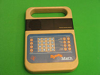 Amazing collection of 80’s-ish retro electronic games. The speak and math is my favorite. Here’s my flickr gallery for retro electronic games. There’s also a picture in my photostream of a poster from a 1981 Tron video game contest. [
 Good if you’re in New York, I’ll be there this week and will need this! This website is an attempt to make it easier for the road-warrior’s, students, free loaders etc to find locations that offer free wireless internet access in the New York City area by showing all free wireless nodes on a Map of New York.
 One of the little-known freebies Gmail offers is a portable SMTP server to send mail from any network for any email address. Travellers who use their ISP’s SMTP server to send mail with their email program (like Thunderbird or Outlook Express) can find themselves in a bind if they’re on another network away from home, like at a coffee shop, airport or visiting relatives.
 Satellite images printed directly to carpet…“In addition to recalling the experience of flight and flying, this piece, by depicting the larger geographical area, also helps to reinforce a sense of belonging and/or connection for the traveler. In this way, the carpet can also be read and experienced as a “welcome mat” for visitors arriving in Sacramento”.
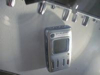 This might be the best portable audio recorder for the podcasting types (if/when it comes out). CompactFlash-based device, 24-bit/96 KHz WAV/MP3, mic / line / digital ins, USB 2.0 connection. (Specs subject to clarification/change.) Now, M-Audio has shown the portable recorder again, at the Barcelona AES Conference
  Good overview. Unlike burning fossil fuels, using nuclear fission to generate electricity produces no soot or greenhouse gases. This helps keep the skies clean and doesn’t contribute to global warming. The World Nuclear Association estimates that the electricity industry would add 2.6 billion tons of carbon dioxide to the atmosphere each year if it used coal power instead of nuclear