





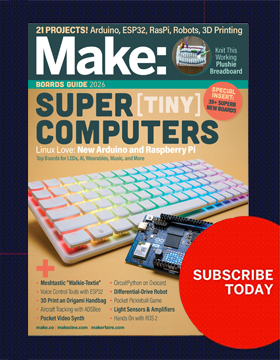

Microcontrollers and single board computers continue to get better as 2026 barrels toward us with more power and more capabilities that are perfect for amping up your next build. And while the big names like Arduino and Raspberry Pi have just released some exciting new products, they’re not the only game in town. Here are 15 standout boards that have us excited for 2026.

1. Raspberry Pi 500+

- Quad Arm Cortex-A76, RP2040
- Built-in mechanical keyboard
- 256GB NVMe SSD
- 2x mHDMI, 84 RGB LEDs
- Debian-based Raspberry Pi OS
- $200
Single (Key)Board Computer: For the first time ever, Raspberry Pi has released an actual computer! They’ve been doing similar since 2012, but this is the first consumer-ready, plug-and-play model with on-board storage and a pre-installed OS image. Plus the RP2040 powering the clicky mechanical keyboard’s LED animations is completely hackable, unlocking limitless possibilities!
2. Arduino UNO Q

- Quad Arm Cortex-A53, Arm Cortex-M33
- Add keyboard and mouse via USB-C
- 16GB eMMC
- Video output via USB-C, 4 RGB LEDs, 8×13 LED matrix
- Debian+Python/MicroPython/C++
- $44
Dual-Brain SBC+MCU Hybrid: When is an Uno not an Uno? When you add a powerful system-on-chip (Soc) to the usual microcontroller’s (MCU) form factor. This means that you can use all the shields and libraries you’re already familiar with on the MCU side, paired with a full-blown Linux machine for running AI models, hosting a web server, or connecting to USB peripherals — such as a keyboard and mouse, which when combined with an HDMI monitor let you program the Arduino (MCU) on the Arduino (SoC) with the new Arduino App Lab! It’s Arduinos all the way down!
3. Unihiker K10

- ESP32-S3
- Integrated mic, 2MP camera
- 16MB flash, microSD
- 2.8″ touchscreen, 3x RGB LEDs
- MicroPython/C++/Platform IO/Mind+
- $29
AI-Capable Smart Display: Continuing the theme of eschewing the need for a desktop or laptop, the Unihiker K10 is a single-board computer (SBC) with Wi-Fi, Bluetooth, a microphone, speaker, oodles of sensors, and even a built-in display. You can explore powerful examples right out of the box without a computer, and then combine with the Arduino IDE or MicroPython to create new functionality, since it’s powered by the ESP32-S3 MCU, rather than an application-class processor running Linux.
4. Adafruit Fruit Jam

- RP2350B, ESP32-C6
- Add keyboard/mouse/game controllers via USB
- 16MB flash, microSD
- DVI output on the HSTX
- CircuitPython/C++
- $40
Retro-Inspired SBC: Another MCU-powered SBC, the Fruit Jam harnesses the power and Programmable I/O (PIO) of the RP2350 to create a business-card-sized, chonky-fonted, retro-reminiscent computer. Instead of running BASIC like those classic machines and the Japanese Programming Club Network’s Ichigo (Strawberry) Jam that partially inspired it, this fruity evolution predictably runs CircuitPython. There’s even a pico-umac fork that lets you go fully retro and run an Apple Macintosh 128K!
5. Bela Gem Multi

- Quad-core Arm Cortex-A53
- Browser-based IDE MicroSD
- 10-channel, 24-bit, 96kHz audio
- C++/Pure Data/SuperCollider/FAUST/Max
- $175
Pocket Audio Workstation: I’m very excited about the PocketBeagle 2, which packs a ton more power into the same Altoids Smalls tin as the original, and was going to feature it here, until I realized that the Bela team is also extremely excited about the PB2, and I could feature their amazing new Bela Gem line and get two boards stoned at once. The Gem family are the new cheat code for creating powerful musical instruments and sound installations, pairing PB2 power with 10 channels of high-resolution audio, plus a browser-based IDE that lets you jump into the jam with zero setup, with inline documentation and autocompletion.
6. D-Robotics RDK X5

- Octa-core Arm Cortex-A55
- 4x USB A, 1x USB-C, 40-pin GPIO
- MicroSD
- Full-size HDMI
- Ubuntu
- $90
Like Pi, With AI: At Maker Faire Shenzhen last year, I stumbled upon a Raspberry Pi form-factor board I’d never seen before, with striking orange headers against a black PCB. They were as excited to talk to me as I was to them, and I quickly learned that this board that I saw powering all manner of robot and AI demos contained a 10 TOPs NPU, yet cost about the same as the equivalent Pi 5 (4/8GB) model, which requires an additional AI HAT to get this kind of AI performance. I could go on, but instead recommend you head over to our livestream interview!
7. OpenMV AE3

- Dual-core Arm Cortex-M55, dual Ethos-U55 NPUs
- 1MP global shutter camera
- 32MB flash
- USB-C, OpenMV IDE
- MicroPython
- $80
Compact, Capable AI Cam: I’m a huge fan of OpenMV, and last year when we featured their RT1062 in this section, co-founder Kwabena Agyeman told me they had something exponentially more mind-blowing on the way. I was extremely lucky to get my hands on one half of the pair of boards that tripled this year’s Kickstarter goal, and these claims were not exaggerated: the tiny AE3’s performance with object detection frameworks like YoloV8 is more reminiscent of a multi-watt Jetson Nano than a 50mA MCU production-ready platform that’s the size of a quarter.
8. IceWhale ZimaBoard 2

- Quad-core Intel N150
- 2x USB 3.1, 1x PCIe 3.0
- 32GB eMMC+2x SATA 3.0
- Mini DisplayPort
- ZimaOS/CasaOS/Linux/Windows
- $199
Pocket-zized Zerver: My first ZimaBoard arrived in a striking James Bond-style briefcase with the words “World’s First Hackable Single Board Server” emblazoned on it. Instead of Yet Another SBC, the IceWhale team carved out their own segment with an Intel-based processor that lent itself more easily to deployment as a media server, NAS, or homelab than the Arm-based Pi. After an incredible amount of customer research (see “Indie Boards,” Make: Volume 95), Lauren and his team are back with the ZimaBoard 2 and the lofty goal of restoring digital sovereignty with a personal local cloud instead of relying on the giant evil platforms that dominate today.
9. Luckfox Lyra Pi B W

- Triple-core Arm Cortex-A7 + Arm Cortex-M0
- 2x USB-A, 40-pin GPIO
- MicroSD (optional 8GB eMMC)
- MIPI DSI
- Buildroot/Ubuntu
- $27 with Wi-Fi
Parsimonious Pi-like Platform: My original Raspberry Pi cost $35, and while the latest Pi 5 may represent a huge leap forward in performance, the least expensive (2GB) model is now $50. Adjusted for inflation that’s actually spot on, but sometimes you just want an extra “Pi” to bung in a project, and the Luckfox Lyra line are emerging as an attractive candidate. With form factors mimicking the traditional Pi, Zero W, and even the Pico, the Lyra brings a triple-core Arm Cortex-A7 application processor, M0 MCU, 512MB, and a bewildering array of optional add-ons, including 4G connectivity and eMMC storage. Just keep in mind that not everything you expect from a Pi can be taken for granted with the Lyra — for example, screen connections are via MIPI DSI rather than HDMI.
10. Jumperless V5

- RP2350B
- Probe, clickwheel, terminal via USB-C 16MB flash
- 451x RGB LEDs, 0.91″ OLED module (optional), Bus Pirate adapter, runs Doom
- MicroPython/C++/Jumperless apps
- $369
Bonkers boujee breadboard: We shared a peek at the latest features of Kevin Santo Cappuccio’s newest Jumperless iteration in last year’s guide (Make: Volume 91, page 23), but its evolution has been significant, and in some ways absurd, since then. In addition to the glorious V5 probe, a new adapter board breaks through the Arduino Nano form factor limitation with a Pi-style 40-pin header, and, amazingly an OLED capability which duplicates the breadboard “display.” As I witnessed in Kevin’s hotel room at Teardown (Volume 94, page 118), that same display can now be echoed to a connected computer’s command line — including while playing Jumperless’ own Doom port. Plus a bonus Bus Pirate/Qwiic/Stemma QT/Whatever adapter board, Lego/Technic compatibility, an onboard MicroPython interpreter with JFS (Jumperless FileSystem), and, and … !
11. Pimoroni Presto

- RP2350B
- Qwiic/Stemma QT (Starter Kit also includes sensor stick and game controller)
- 16MB flash, microSD
- 4″ touchscreen, 7x RGB LEDs
- MicroPython/C++
- $76 ($110 for Starter Kit)
Delightful Desktop Display: I’ve been a huge fan of passive desktop displays ever since the original Chumby, and the new RP2350-powered Presto feels like a deliciously hackable modern spiritual successor to my beloved beanbag, with exponentially more panache to boot. The 4″ touchscreen with RGB ambient lighting and RM2 wireless module form the basis of a super-Chumby for the new era!
12. CrowPanel E-paper HMI Display

- ESP32-S3
- Rotary switch+buttons
- MicroSD
- 5.79″ e-paper display
- MicroPython/C++/ESP-IDF
- $30
Easy E-paper Exhibitor: Another glorious canvas for your imagination, the CrowPanel features a gorgeous 272×792 electrophoretic display (EPD) with anti-glare coating for incredible readability under natural lighting. Since the display only consumes power when refreshing, it’s ideal for low-power dashboards, home automation displays, or signage — it even continues to show the most recent content after losing power. Available in at least half a dozen different sizes, the CrowPanel E-paper Display adds a striking interface to your next project.
13. M5Stack Tab5

- ESP32-P4, ESP32-C6
- Dual-mic array, 2MP camera, 1x USB-C OTG, 1x USB A host
- 16MB flash, microSD
- 5″ touchscreen
- UIFlow2/C++/ESP-IDF
- $55
Itinerant Overachieving Terminal: M5Stack are an absolute powerhouse when it comes to creative, useful products for makers. I was lucky enough to attend the grand opening of their new Shenzhen office last year, and beheld a wall displaying a series of new products that they somehow managed to release weekly every single Friday. The Tab5 is perhaps one of their most ambitious yet, with too many features to list here, the sum of which results in actual tablet-like capabilities, including a 1280×720 display, a front-facing camera, and a 400MHz dual-core ESP32-P4 to power it all. My favorite feature? Adoption of the NP-F550 camcorder battery standard for convenience and safety (same as my 1995 IBM PC110!).
14. LilyGo T-Deck Plus

- ESP32-S3
- LoRa (433/868/915 MHz), GPS, trackball, backlit keyboard
- 16MB flash, microSD
- 2.8” display, optional external antenna
- Meshtastic
- $71
Off-grid Neo-Blackberry: LilyGo is another prolific creative device purveyor who I had the chance to get to know in Shenzhen, and along with the hardware we’ve mentioned from Seeed, Elecrow, RAK, and others in this issue (see also “Meshtastic Walkie-Textie,” Make: Volume 95), Lily and her crew have really been innovating in the LoRa/Meshtastic space. The T-Deck Plus is a delightful class of Meshtastic device, in that rather than needing to pair with a phone to send messages and perform other advanced functionality, it contains its own Blackberry-style keyboard, display, and everything you need to get on the mesh and start sharing messages. Available with internal or external antenna for optimal convenience or performance.
15. Seeed Wio Tracker L1 Pro

- nRF52840
- LoRa (862–930MHz), GPS, button, 4-way joystick
- 1MB flash
- 0.91″ OLED, external antenna
- Meshtastic
- $43
Minimalist Mobile Mesh: I’ve been experimenting with LoRa for years, but it wasn’t until I encountered Meshtastic via Seeed’s T1000-E that it became part of my daily life. In addition to that small tracker, which I carry everywhere in order to stay connected to the mesh, I’ve tooled up with dedicated home, car, office, and makerspace nodes. But if I had to pick just one, the Wio Tracker L1 Pro is the perfect blend of consumer readiness, hackability, portability, and signal strength. Also available without the case, or without a display, for directly embedding in projects.
This article appeared in Make: Volume 95.

ADVERTISEMENT