









Claytronics
 It’s like robots, made out of clay. Tiny robots that can turn into any shape – from a replica human to a banana to a mobile phone – are being developed by scientists in the United States. The new science of claytronics, which will use nanotechnology to create tiny robots called catoms, should enable three-dimensional copies of people to be “faxed” around the world for virtual meetings. Link.


 How many possible ways are there to lace an average shoe? This simple question, when answered with mathematics, results in some surprisingly big numbers – on an average shoe with six pairs of eyelets, there are 1,961,990,553,600 ways to feed a shoelace though those 12 eyelets. Here are 24 ways to tie your shoes.
 How to make a really big poster from a lot of photos, now for Photoshop PC users.
 Handy way of running PHP on a USB drive…the most obvious being demonstrating your wares to a potential client on their computer , but the possibilities should be obvious to any PHP heads who in general I find are quite an inventive bunch. In the past I have produced AMP CD-R’s , e.g. Apache/MySQL/PHP installation running from a CD-R , a USB flash drive install is even easier since we don’t have to worry about non-writable media, the point of this article by the way is to provide a portable system with no hard-coding of drive paths etc.
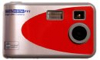 Mac version of the disposable digital camera mod. PV2Mod is a simple program I wrote to modify files stored on a PV2 camera. It is currently only a Mac command-line program (since OS X, macs have become the choice of many geeks, and I’ve found USB programming for Mac to be very easy). While PV2 can modify any file in the camera’s root directory.
 This Web site has interactive tools that provide a unique learning experience for users, regardless of their musical training. Students of music composition can explore algorithmic composition, while others can create musical representations of models for the purpose of aural interpretation and analysis. Here, the algorithmic process is used in a creative context so that users can convert sequences of numbers into sounds.