



Science

DIY science is the perfect way to use your creative skills and learn something new. With the right supplies, some determination, and a curious mind, you can create amazing experiments that open up a whole world of possibilities. At home-made laboratories or tech workshops, makers from all backgrounds can explore new ideas by finding ways to study their environment in novel ways – allowing them to make breathtaking discoveries!

In the MakerShed: Cooking for Geeks

In the MakerShed: Cooking for Geeks

Are you the innovative type, the cook who marches to a different drummer — used to expressing your creativity instead of just following recipes? Are you interested in the science behind what happens to food while it’s cooking? Then Cooking for Geeks by Jeff Potter is the book for you. Available in the MakerShed.

Car Tire Pottery Wheel

Car Tire Pottery Wheel

Mississippian Hillar Bergman is known, first and foremost, as a musician—he plays the fiddle. His YouTube channel, as catinnahat, has several videos describing his wonderful “apocalyptech” potter’s wheel, and demonstrating his skillful use thereof. It’s just an old wheel and tire, mounted on an oak stump with a pair of pipe flanges and a short nipple, and spun up to speed with a tire iron stuck through the holes in the hub.

Skill Builder: Jeff Potter’s Yogurt Lab

Skill Builder: Jeff Potter’s Yogurt Lab

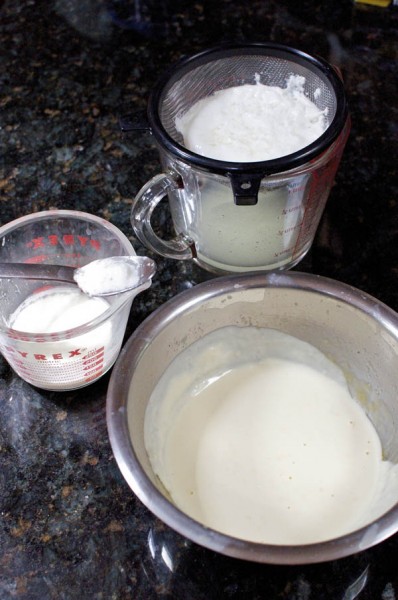
One of the great things about learning food science is the need to test everything. I say “need” because, in truth, it’s a lot of fun to geek out over the details and try various experiments that I wouldn’t normally try. Take yogurt. Everyone is familiar with it, but how is it made? Where does it come from? (Besides the store…) Making yogurt is incredibly easy, especially once you know some of the food science background. A bunch of different types of “friendly” bacteria chow down on the lactose sugars in milk, creating lactic acid in the process. This process, called fermentation, also changes the structure of the milk, turning it into a gel.