








Make a circle out of squares…
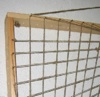 Fun art project from Brob on Instructables “Build a square wooden frame with nails all around. Tie string round the nails and repeat until all nails are used. You should be left with a cool circle shape and a nice piece of art for very little cost.” Link.

 Erinys writes “Here’s how to build a contact microphone. A step by step I put together years ago, but it is surprisingly still of use. Contact microphones may be used to record acoustic waves that propagate through media such as wood, sheet metal, or a block of ice. Doesn’t sound “pretty” in a classical sense, but if you’re into noise and field recordings, you’ll love what you can coax out of an old tin can with one of these attached.”
  Wired article about making free ringtones – “Cell-phone customers have spent more than $4 billion on ringtones taken primarily from popular hits. Now MIT’s Media Lab hopes to unleash some new creativity into this market with a ringtone composition tool to the masses for free.”
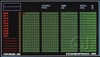 Peter writes “Soon, hackers will exceed Sony in developing cool stuff for the PSP: not only is the 2.60 firmware hacked, but there’s a sequencer in development to go along with the PSP drum machine! Tracker style, much like the homebrew Game Boy creations. Who’s up for starting a homebrew Game Boy / PSP orchestra?”
 Patrick Keane writes “Here’s how to add a homelink to your car: 1) Buy homelink visors from ebay as cheap as you can get them from any car you like. 2) Tear them apart, and remove the Homelink module. 3) Cut small opening in headliner / dash panel / or opt to rewire the buttons and creatively locate them. 4) Attach +12V (black) and GND (brown) wires to nearby power source (overhead lamp). 5) Train it using your garage door opener(s) (see


 Hans writes – “This LED Matrix Clock is a feasability study for a much larger project I am building for my employer, the intention was to prove to myself (and my employer!) that I am able to drive an LED matrix from a PC. This is the first project I have made which is driven by a PC. The clock uses 3 B64CDM8/B48CDM8 8×8 5mm LED Matrix modules from Nexus Machines, each having an onboard MAX7219 display driver chip. These require an SPI serial interface, which I by toggling pins of the host PC’s parallel port (printer port). The small software application which drives the displays is written in Delphi 5 and runs on Windows NT 4.”