










DIY iPod breakout dock…
 Excellent DIY iPod dock for tinkering on panocamera “I needed a quick way to test signal interactions with a microcontroller and an iPod, so for about $50 and an afternoon of soldering, I threw together an iPod dock/breakout box. Ingredients include a small breadboard, and a $15 cheapie usb charger cable, which when stripped of its plastic housing luckily has all 30 dock connector pins ready to solder.” Link.

 Using an Xbox (1st generation) headset and a PSP headphone remote you can make your own headset for SOCOM PSP. You can likely use just about any type of headset, like the ones that come with cell phones too.
 Here’s part 2 of Fabienne Serriere’s great rotary phone to cell phone project “This week we bring you Part 2 of The Magic Phone How-To: The Circuit. The Magic Phone is a project where both a DECT compatible wireless home phone and a GSM cellphone are placed inside an old rotary phone. In Part 1 of the How-To, we showed you how to reverse engineer the matrix on a phone circuit.”
 Here’s a pretty simply how to on using a text message (SMS) from your phone to put your Mac to sleep at home. While that in itself isn’t that useful, you could easily make your own scripts and email rules to do other things like send back ring tones, trigger a robot, turn on a web camera…[
 Chris writes “Considering how many people bought the HP Bluetooth stereo headphones and got disappointed when the headband snapped, I thought that it was time to do something useful with the ‘broken’ headphone. We’ll take you through all steps of dismantling the Bluetooth receiver and building it into a nice mouse housing with 12v in and line out. And as the device keeps its battery, you can also use this as a portable Bluetooth stereo receiver and plug in you high quality headphones or even connect it to your stereo at home.”
 “In the November 1999 issue of EPE (Everyday Practical Electronics), a small and intriguing circuit was published in the Ingenuity Unlimited section by Z. Kaparnik. It was a very small implementation of a typical transformer feedback single transistor invertor. The transformer was a standard ferrite bead with two windings wound on it and the circuit was using the high voltage pulse generated when the transistor turns off to light an LED from a single 1.5V battery. This page has two variations on the original design to use the simple circuit in a useful manner.”
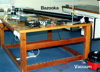 “This was built as an experiment to amuse secondary school pupils at “Make It In Scotland”, a careers event organised by Careers Scotland, which took place in Motherwell in February and March 2003. It uses a vacuum cleaner to suck a projectile up a long pipe. The intension is that the missile should then carry on out the end rather than being brought to a dead stop by the suction. To get the best results, both ends are blocked off with card, then the card at the back of the tube is removed quickly. The vacuum keeps the second card in place until it is knocked off by the projectile.”