









Cut glass circles with ordinary scissors?
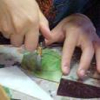 Steve writes “I was reading an old 1950’s “how to” magic book for kids that described a trick that required a small round piece of glass. It suggested that I could make such a piece of glass by cutting the glass into a circle with ordinary scissors. How? By doing the cutting in a sink filled with water. A quick search on google and sure enough, some interesting information on the subject. I thought Make: blog readers might find this interesting–even if it doesn’t work as well as advertised.” Link.

 Article about holiday goods you can buy/make from a shop near MAKE HQ “Typewriter keys transformed into earrings, bike chains that become bracelets, journals bound between the covers of old books and decorative bowls made from old LP records. These are just some of the recycled goodies for sale at Renga Arts, a relatively new Occidental store that turns one person’s trash into another’s treasure.”
 Kaden (who has an excellent
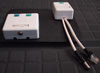 Chris writes “I was looking to make my own Power Over Ethernet injector for my Apple Airport Base Station, and found this great looking HowTo. Haven’t tried it yet, but I plan to.”
 “The Quarter Shrinker uses a technique called high velocity electromagnetic metal forming, or “Magneforming”. This technique was originally developed by the aerospace industry in conjunction with NASA, and has been popularized by Aerovox, Grumman, and Maxwell. It involves quickly discharging a high energy capacitor bank through a work coil to generate a very powerful and rapidly changing electromagnetic field which then “forms” the metal to be fabricated. While it works best with metals of relatively high electrical conductivity such as copper or aluminum alloys, it will work to a more limited extent with many poorer conducting metals and alloys such as steel or nickel.” Thanks Derek!
  Martyn sent along some more photos of the LEGO Pinball machine we
 This MP3 player is made from an old Nintendo controller. The buttons were rewired and are used to control the music and select the songs. If you have an old controller and a busted up MP3 player, this looks like a fun mod to attempt. [