







Rip a Vinyl With Your Scanner
 Clever...hack runs a virtual needle around a scanned image of an LP to create a .wav file of the recorded music. You won’t want to rip your old LPs this way, though. Programmer Ofer Springer’s demonstration file, a reconstructed recording of Vivaldi’s “The Four Seasons,” Link.

 We’ve all had to switch phone providers for one reason or another, but man–they really sock it to you with all sorts of fees. It turns out there are ways to get out of this, but you should only do it if you’re really really going to move :-] We finally have number portability, so perhaps we’ll eventually not have contract lock ins too.
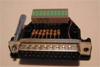 PC parallel port can be very useful I/O channel for connecting your own circuits to PC. The PC’s parallel port can be used to perform some very amusing hardware interfacing experiments. The port is very easy to use when you first understand some basic tricks. This document tries to show those tricks in easy to understand way.



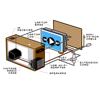 You see, every Maker got together in our secret cave and decided, yes, this is retro radio mod week...gutting a vintage radio and stuffing the laptop parts inside to make a jukebox that can store and play MP3s or send them to a home stereo. It can even be wirelessly networked to stream songs from a PC or play Internet radio stations.
 Great how-to. The free version of Google Earth does not allow you to do certain things, like produce paths. So, I hacked that together by editing the .kml file in WordPad (ah, brings back memories of html before wysiwyg editors). After producing some stunning tour animations on-screen, I quickly wanted to be able to save them as a movie. The problem is, you can not save movies unless you buy the $400 Pro version of Google Earth, plus the optional Movie Maker module for God knows how much more. The heck with that! I figured once it was displayed on my screen, I should be able to save it. So I did.