








HOW TO – Write iSync Phone Plugins
 Great article on making iSync phone plugins from The Tao of Mac “Given that there seems to be a lot of misconceptions about exactly how iSync detects and understands the capabilities of mobile phones and pretty much no written documentation about the whole process, I thought it was about time I published my notes on the matter.” Brian reminded me that you can use’screen’ to talk to serial ports (for example, ‘screen /dev/tty.Bluetooth-Modem’), so you don’t need ZTerm to do this…Link.

 Leadingzero writes “Inspired by
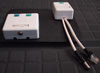 Chris writes “I was looking to make my own Power Over Ethernet injector for my Apple Airport Base Station, and found this great looking HowTo. Haven’t tried it yet, but I plan to.”
 This MP3 player is made from an old Nintendo controller. The buttons were rewired and are used to control the music and select the songs. If you have an old controller and a busted up MP3 player, this looks like a fun mod to attempt. [
 “The original Minix was an educational operating system – that actually served as the inspiration for development of Linux. MINIX 3 is a new open-source operating system designed to be highly reliable and secure. It is based somewhat on previous versions of MINIX, but is fundamentally different in many key ways. MINIX 1 and 2 were intended as teaching tools; MINIX 3 adds the new goal of being usable as a serious system on resource-limited and embedded computers and for applications requiring high reliability.” One of the nice things about Minix 3.0 is that unlike previous versions of Minix – it installs and runs just fine inside of Virtual PC. Thanks Brian!
 “The ideal time to install a home network is while your home is being built. It is so much easier to run all the cabling throughout your home before the walls are finished. This web page will describe the network that I installed in my new home as it was being built with a focus on the ‘How To’ aspect.” [
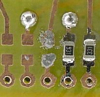 Good how to on surface mounting with hand-soldering tools. “Integrated-circuit (IC) manufacturers produce fewer new designs in dual in-line package (DIP), shrink dual in-line package (SDIP), or other through-hole forms. These are the classic looking chips that have legs that extend through the circuit board and are soldered on the other side. They’re easy to put into sockets and easy to use on solderless breadboards. Most of the new families appear only in surface-mount technology (SMT), surface mount device (Philips SMD), or surface mount component (SMC) packaging such as small outline integrated circuit (SOIC), small outline J-leaded (SOJ), small outline transistor (SOT), plastic leaded chip carrier (PLCC), quad flat pack (QFP), or thin small outline package (TSOP). Without special adapter (carrier) boards, surface-mounted components make breadboarding and hobbyist experimentation difficult.” Thanks Greg!