










How-To: Minecraft Brunch Cubes
Play with your food! Instructables user supersoftdrink provided a method for Minecraft brunch: brunchcraft!
Play with your food! Instructables user supersoftdrink provided a method for Minecraft brunch: brunchcraft!

Learn the basics of fiber optics communications while you build this exciting kit. Transmit your voice or 1kHz signal through the fiber optic cable to a fiber optic receiver. Transmitter and receiver are on separate boards and can be located hundreds of feet apart! Requires 2 9V batteries.
Emily from The Student/Teacher has a tutorial for this sweet embroidered version of a growth chart over on The Long Thread. The quilt version of this traditional record of your child’s growth would be an incredible heirloom piece.
Christina McFall is obsessed with color, texture, form, and chemical reactions. She approaches the art of cyanotype printing with the mind of a scientist, carefully recording tests and cataloging results.

Beth’s prototype design, here, uses 100 turns of AWG 40 magnet wire, an ATtiny85 integrated circuit, a couple of surface-mount capacitors, and a duct-tape substrate sealed under a layer of clear packing tape. She reports that “the read range is practically indistinguishable from a mass-produced RFID card.”
This cool burlap boutonniere from Suzannah of Adventures in Dressmaking is hip without trying too hard. I love the textures of the burlap and buttons and feathers all together. See how to make one yourself over on her blog!
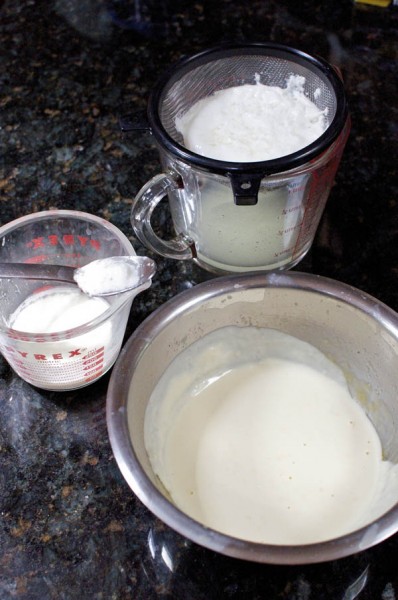
One of the great things about learning food science is the need to test everything. I say “need” because, in truth, it’s a lot of fun to geek out over the details and try various experiments that I wouldn’t normally try. Take yogurt. Everyone is familiar with it, but how is it made? Where does it come from? (Besides the store…) Making yogurt is incredibly easy, especially once you know some of the food science background. A bunch of different types of “friendly” bacteria chow down on the lactose sugars in milk, creating lactic acid in the process. This process, called fermentation, also changes the structure of the milk, turning it into a gel.